Ingredient profile: chromium
Chromium Picolinate in Payarmin: 0.7 mcg Per 1 ml Serving
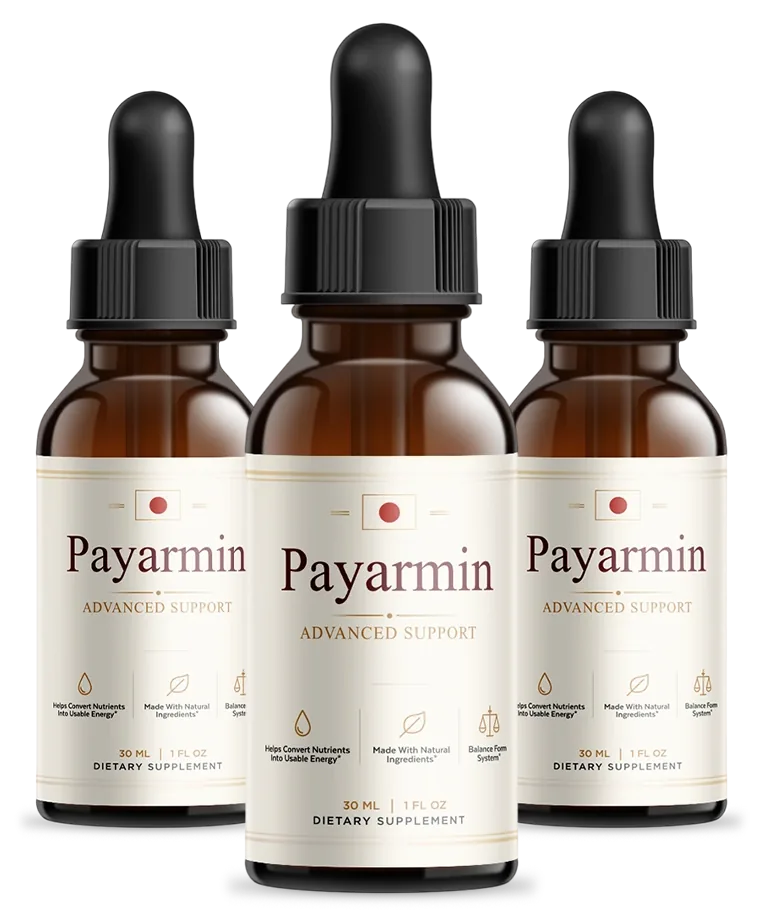
Chromium picolinate in Payarmin is a trace mineral listed once on the label: 0.7 mcg per 1 ml serving, 2% of the Daily Value. Trials of chromium for glucose used up to 1,000 mcg a day and found mixed results, so this amount sits far below them. No trial has tested Payarmin itself.
Written by the Payarmin label deskUpdated
The label line
What is chromium picolinate in Payarmin?
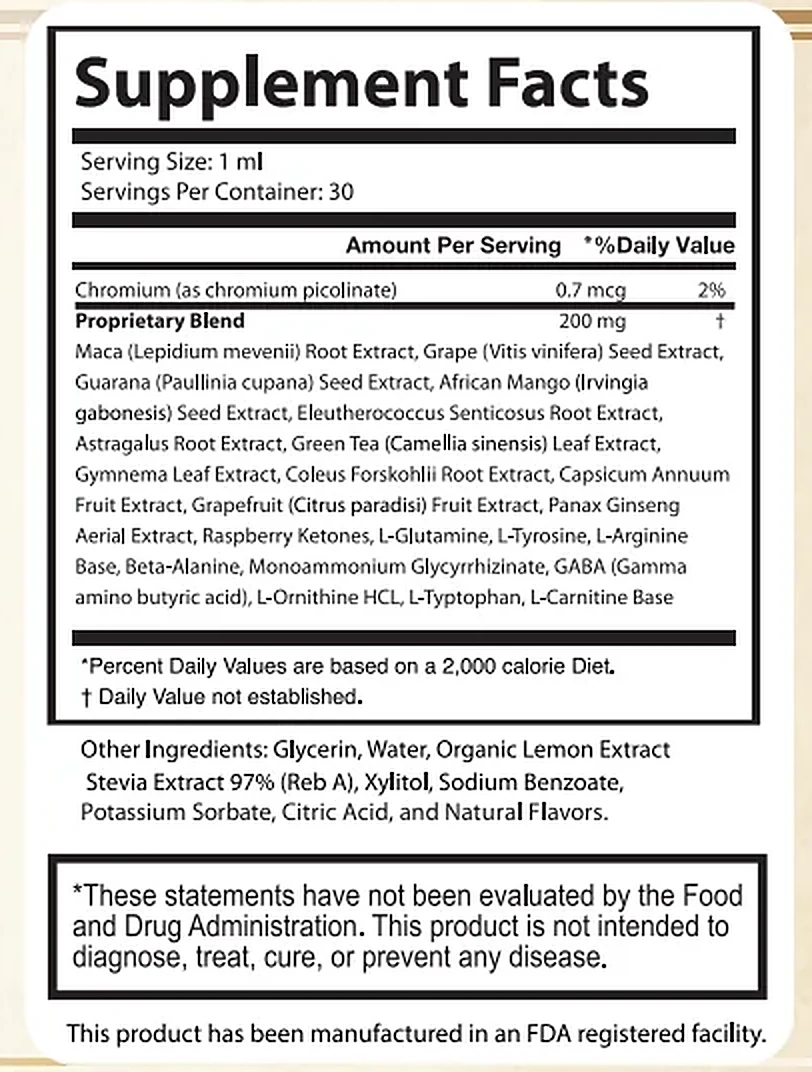
Chromium picolinate in Payarmin is the one ingredient with a printed amount: 0.7 mcg of chromium per 1 ml serving, which the label rounds to 2% of the Daily Value.
It sits above the 200 mg proprietary blend, not inside it. The words “as chromium picolinate” name the form of chromium the maker used.
Chromium is a trace mineral. NIH sets an Adequate Intake of 20 to 35 mcg a day for adults and a Daily Value of 35 mcg (Chromium per NIH ODS).
Open the Supplement Facts panel and chromium is the first line. It is the only one that ends in a number. Every other line belongs to the blend, where the label gives one total of 200 mg for 22 ingredients.
That makes chromium easy to check. You can set 0.7 mcg beside the NIH intake numbers and beside the trial doses, with no guessing.
The sales page leans on chromium too. It is one of the six ingredients it names, and we quote its claim further down.
The numbers
How does 0.7 mcg compare with the Daily Value and trial doses?
One serving of Payarmin gives 0.7 mcg of chromium. That is 2% of the 35 mcg Daily Value and well below the 200 to 1,000 mcg a day used in key glucose trials (Chromium per NIH ODS).
A bottle holds 30 servings of 1 ml. Even a full bottle taken in one day would give 21 mcg, which is about the low end of the Adequate Intake and still a tenth of the lowest trial dose.
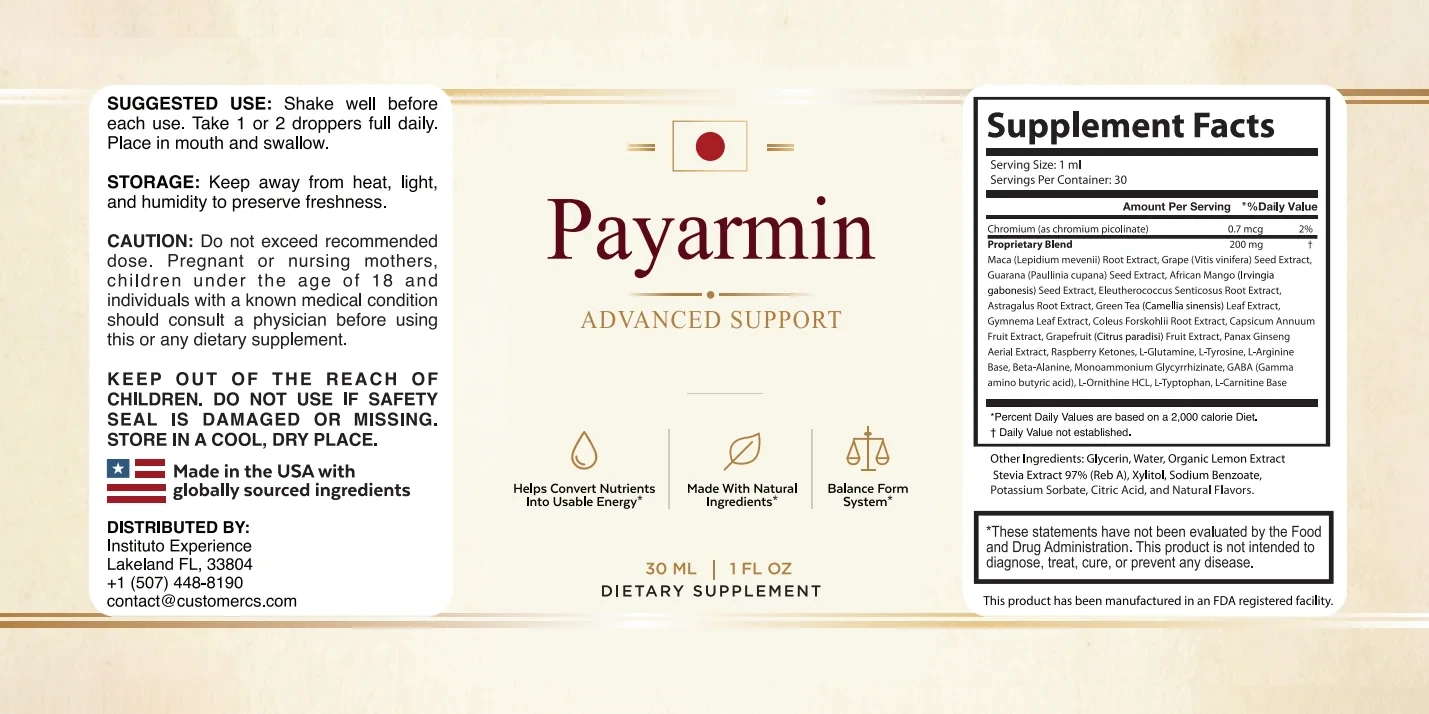
The label does not say how many mL a dropper holds, so 1 or 2 droppers a day cannot be turned into servings from the label alone.
| Benchmark | Chromium | Servings of 1 ml to match it |
|---|---|---|
| Payarmin, one serving (label) | 0.7 mcg | 1 |
| Adequate Intake, women 19 to 50 | 25 mcg | About 36 |
| Adequate Intake and Daily Value, men 19 to 50 | 35 mcg | 50 |
| Low trial dose in a key diabetes study | 200 mcg | About 286 |
| High trial dose in the same study | 1,000 mcg | About 1,429 |
Benchmarks come from the NIH fact sheet (Chromium per NIH ODS). The last column is simple division, not a label fact.
The research
What do chromium studies show about glucose?
Chromium studies show mixed results. Some trials found a slight drop in fasting glucose and A1C in people with diabetes, of unclear practical meaning, and none found a change in healthy people (Chromium per NIH ODS).
The NIH sheet describes a 2019 review of 58 trials that gave 1.28 to 1,000 mcg a day. So the range is wide, and the doses that were tested are not the dose in these drops.
NCCIH says only weak evidence exists for a few supplements, chromium among them, and no reliable evidence that any herbal supplement helps control diabetes (Diabetes and Dietary Supplements per NCCIH). The ADA finds no supplement proven to lower blood glucose (Vitamins & Supplements per ADA).
A slight drop
Fasting glucose and A1C moved a little in some trials. The reviewers call the clinical meaning unclear.
No change
Glucose did not change in healthy people who took chromium.
Never tested
We found no trial of Payarmin, and none at 0.7 mcg a serving.
Sales page claim
What does the sales page say about chromium?
The sales page says chromium picolinate will “help insulin enter your cells”. It gives no amount, no trial and no source for the line (Payarmin sales page).
The label prints 0.7 mcg. The research we read shows mixed, small changes at doses hundreds of times higher.
FTC guidance asks for competent and reliable evidence, usually human trials of the same product and dose, behind a health claim (Health Products Compliance Guidance per FTC).
| Source | What it says |
|---|---|
| Sales page | Quoted: “help insulin enter your cells”. No amount given. |
| Label | 0.7 mcg per 1 ml serving, 2% of the Daily Value. |
| NIH | Mixed results at up to 1,000 mcg a day; no change in healthy people. |
For the full list of six sales-page claims, see the benefits page.
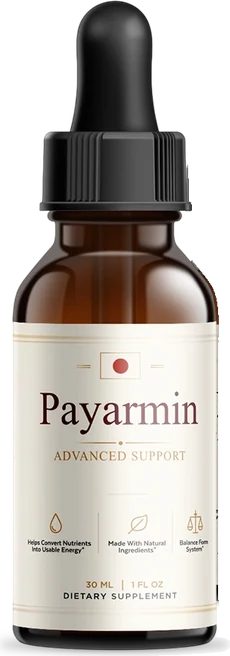
Payarmin: from $49 a bottle30 mL each · label dose: 1 or 2 droppers daily · packs of 2, 3 or 6 · 3 and 6 ship free in the US · backed by a 60-day guarantee
View packsSafety
Which medicines does chromium touch?
Chromium may add to the effect of insulin and other diabetes drugs, which raises the risk of low blood sugar, and it may reduce how much levothyroxine the body absorbs (Chromium per NIH ODS).
A low means under 70 mg/dL for many people with diabetes. The signs are shakiness, sweating, hunger, dizziness, confusion and a fast heartbeat (Low Blood Glucose per NIDDK).
Keep taking every prescribed medicine and dose. Do not stop or change one because of a supplement.
The interaction warnings come from supplement doses far above 0.7 mcg. We found no data on this product, so ask a pharmacist how it fits with your list.
For someone with a low who passes out, has a seizure or cannot safely swallow.
Next steps
What should you do with the chromium numbers?
Read the chromium line as a small, honest number, then decide with your own clinician whether any supplement belongs in your plan.
Proven steps still lead. In the Diabetes Prevention Program, lifestyle changes cut the risk of type 2 diabetes by 58%, and metformin cut it by 31% (Diabetes Prevention Program per NIDDK).
- Show a pharmacist your full medicine list, including any thyroid or glucose drug.
- Judge the drops by your own lab results, not by the sales copy.
Label profile
Where does chromium sit among the 23 label lines?
Chromium is line zero of 23: the only one outside the blend and the only one with an amount. The next 22 lines share 200 mg.
Move on to gymnema, African mango or ginseng to see how the blend lines compare with their studied doses.
| Printed name | Chromium (as chromium picolinate) |
|---|---|
| Kind of ingredient | Trace mineral |
| Where it sits | Chromium line, above the blend |
| Content in 1 ml | 0.7 mcg per 1 ml serving (2% DV) |
| Dose in studies | Up to 1,000 mcg a day in trials (a key diabetes trial used 200 and 1,000) |
| How strong the evidence is | Mixed; a slight fasting-glucose drop in some people with diabetes |
| Usual marketing or folk use | A trace mineral sold for glucose support |
| Chief caution | May add to insulin and other diabetes drugs; can lower levothyroxine absorption. |
FAQ
Questions people raise about chromium picolinate?
One to start with: How much chromium is in Payarmin? Plus 5 more answered below.
Each answer gives the plain reply first, then the reasoning and a citation where available.
How much chromium is in Payarmin?
Payarmin lists 0.7 mcg of chromium, as chromium picolinate, in each 1 ml serving. The label rounds that to 2% of the Daily Value. A 30 mL bottle holds 30 servings, and the label does not say how many mL a dropper holds (Chromium per NIH ODS).
Is 0.7 mcg of chromium enough?
It is enough to count as a small mineral top-up, not a trial dose. The Daily Value is 35 mcg and trials used 200 to 1,000 mcg a day, so 0.7 mcg is about 0.35% of the low end of the trial range (Chromium per NIH ODS).
Does chromium lower blood sugar?
Not reliably. Some trials saw a slight fall in fasting glucose in people with diabetes, of unclear meaning, and none saw a change in healthy people (Chromium per NIH ODS). NCCIH calls the evidence weak (Diabetes and Dietary Supplements per NCCIH). Payarmin has not been tested itself.
Is chromium picolinate safe long term?
The sources we read do not settle long-term safety at supplement doses, and we found no study of this product. At 0.7 mcg a serving the dose is small. The firmer concern is interaction with diabetes drugs and levothyroxine (Chromium per NIH ODS). Ask your pharmacist.
Can chromium interact with medicines?
Yes. Chromium may add to insulin and other diabetes drugs and cause low blood sugar, and it may reduce levothyroxine absorption (Chromium per NIH ODS). The data come from larger doses than 0.7 mcg, so ask a pharmacist before you add the drops.
What dose of chromium did trials use?
Trials used a wide range. NIH describes a review of 58 trials giving 1.28 to 1,000 mcg a day, and a diabetes trial that gave 200 or 1,000 mcg a day in total (Chromium per NIH ODS). Do not assume every trial used 200 or more.
Who wrote this
Who wrote and reviewed this Payarmin guide?
The Payarmin label desk drafted these pages from the bottle label, the order page and public research links.
The clinician who reviews these pages is named in the box below when that review exists.
Every page starts at the printed bottle label, quotes the order page, and links outside research.
Page updated . How we work: editorial standards and how reviews are checked. This site belongs to an authorized Payarmin shop. It is separate from the maker and from the distributor named on the label. Orders placed through our links pay the shop a commission.
Keep reading
Where to go next
Good next stops are ingredients, supplement facts, side effects.
All three use the same label facts and cite their research.
American Payarmin authorized shop
Ready to try Payarmin?
Ask your pharmacist about your own medicines, then choose a size. The larger packs lower the per-bottle price and include free US delivery; the refund clock runs from purchase day.
- Checkout on the sales page
- 60-day results-or-refund guarantee
- US delivery free on 3- and 6-packs