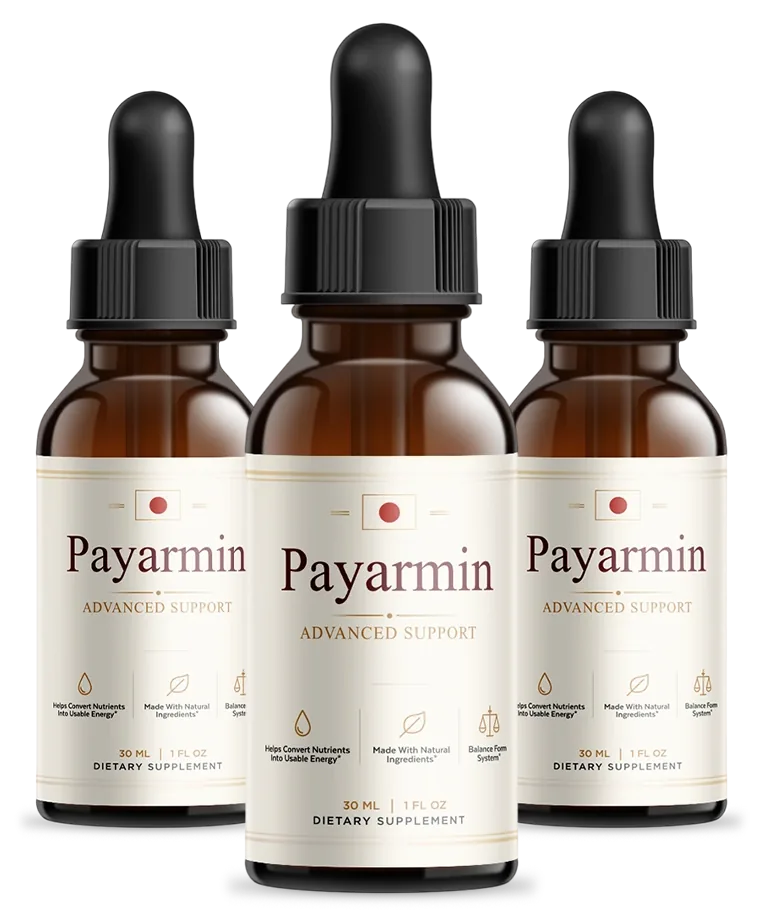
Ingredient profile: Panax ginseng
Panax Ginseng in Payarmin: Aerial Extract, Twelfth of 22
Panax ginseng in Payarmin is an aerial extract, meaning above-ground plant parts, listed twelfth in the blend, so one 1 ml serving holds at most about 17 mg. The sales page calls it a root, and most blood sugar trials used root. No trial has tested Payarmin.
Written by the Payarmin label deskUpdated
The label line
What is Panax ginseng in Payarmin?
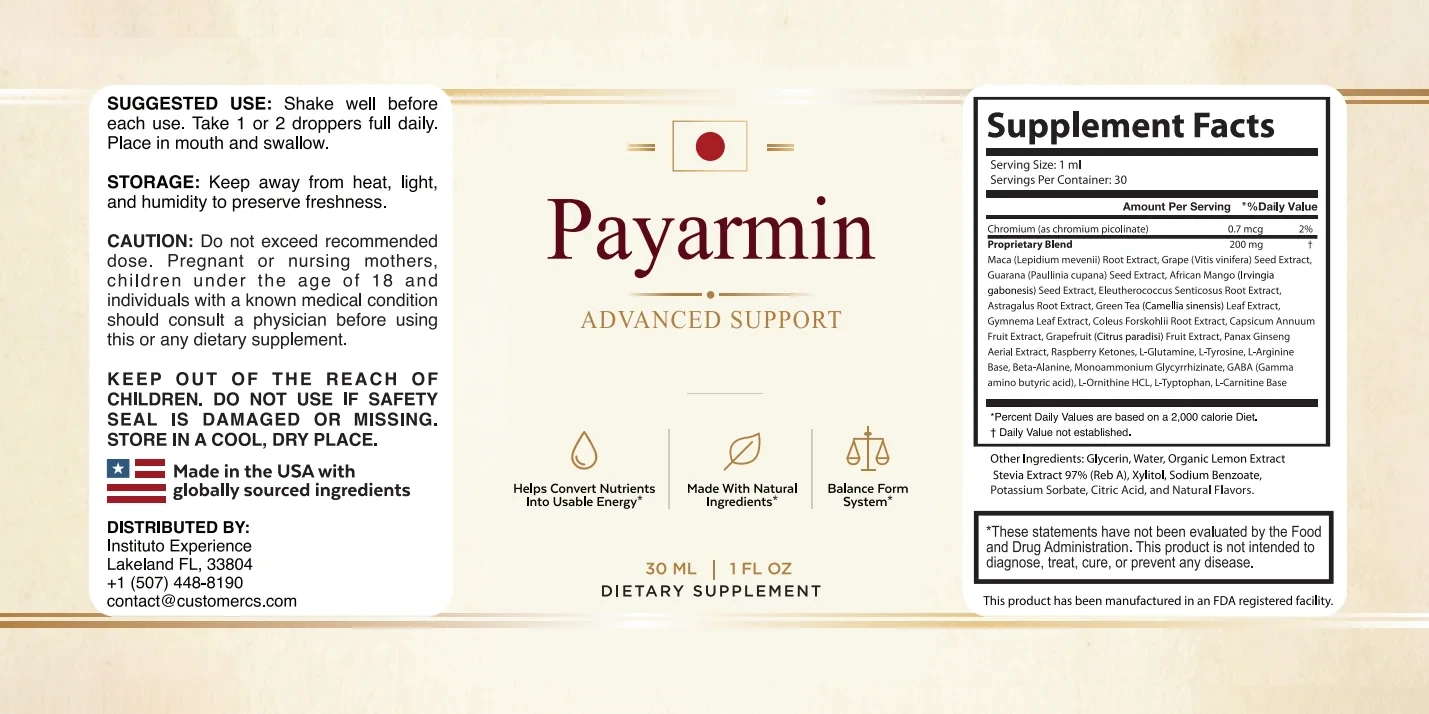
Panax ginseng in Payarmin is an aerial extract, printed on the label as “Panax Ginseng Aerial Extract” and ranked twelfth of the 22 blend ingredients.
The label gives no amount. With eleven ingredients ahead of it, it cannot hold more than about 17 mg in a 1 ml serving (21 CFR 101.36 (eCFR)).
Panax ginseng is the species NCCIH calls Asian ginseng (Asian Ginseng per NCCIH).
Ginseng has real blood sugar trials behind it, which is likely why the sales page names it. The catch is the part of the plant.
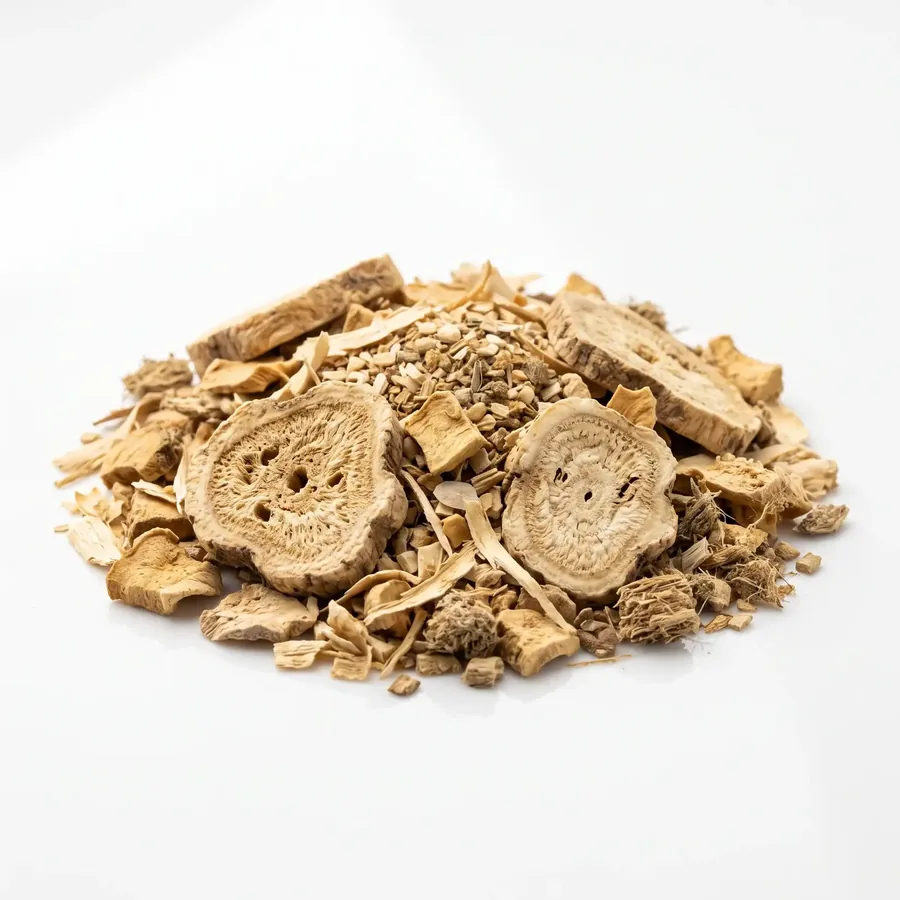
The label does not list root. It lists the aerial part, the plant above the ground. Most of the research below was done on root.
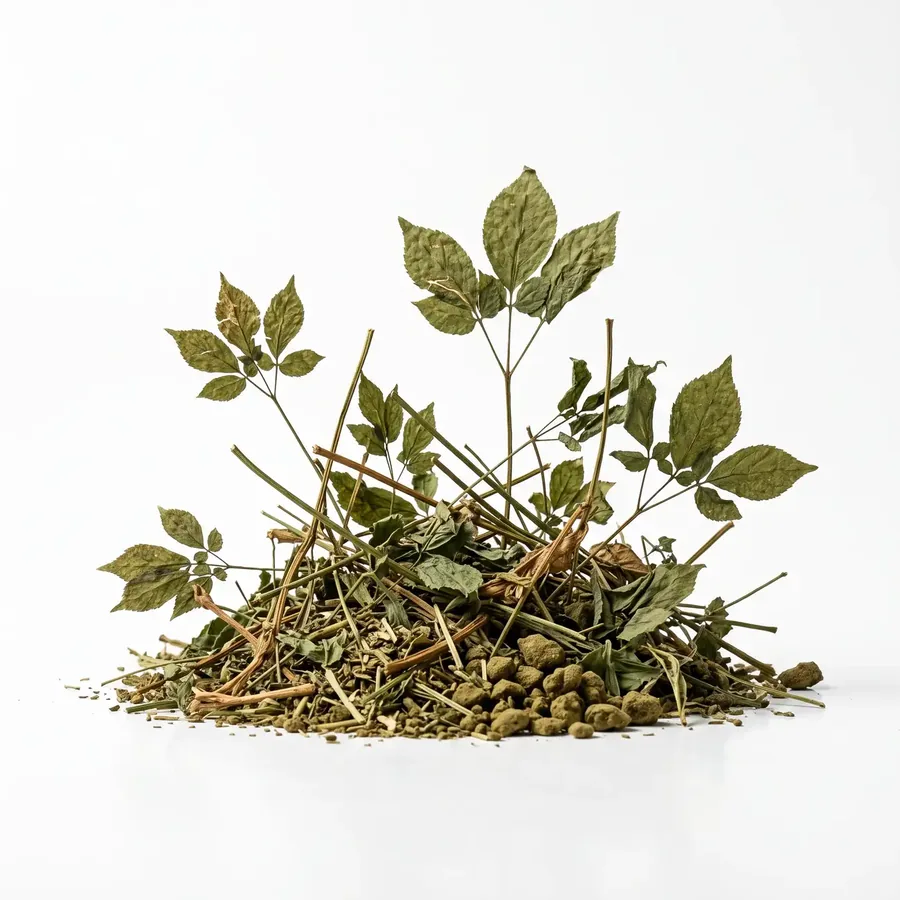
Root or aerial
Why does the sales page say root when the label says aerial?
The sales page calls the ginseng “an ancient root”, but the label says Aerial Extract. The label wins, and aerial parts are not the root (Payarmin sales page).
Researchers measure the active compounds of root, stem, leaf and berry separately, because the parts are different plant materials (stem, leaf and berry (UPLC-QTOF/MS) per Ginsenosides in root).
So root trials do not automatically describe an aerial extract.
“an ancient root”
No amount and no source for the line.
Aerial Extract
The parts above the ground, ranked twelfth of 22 in the 200 mg blend.
The ginsenoside paper we list is a pointer only. We read its title, not its results (stem, leaf and berry (UPLC-QTOF/MS) per Ginsenosides in root).
The math
How much ginseng can one serving hold?
A 1 ml serving holds at most about 17 mg of ginseng. That is the 200 mg blend divided by the ingredient’s place, 12.
An even split would give about 9 mg. Trials of root ranged from about 100 mg to 20 g a day (PLoS One 2014 per Shishtar et al.).
The label does not say how many mL a dropper holds, so two droppers a day may or may not double these numbers.
| Figure | Amount | Compared with 100 mg a day |
|---|---|---|
| Even split of the blend | About 9 mg | About 9% |
| Ceiling for place 12 | At most about 17 mg | At most about 17% |
| Whole bottle at the ceiling (30 servings) | At most about 500 mg | 5 days of the lowest root dose |
| Lowest root trial dose | About 100 mg a day | 100% |
| One berry-extract trial | About 1,000 mg of extract a day | Ten times higher |
Root doses are from a 16-trial review (PLoS One 2014 per Shishtar et al.). The berry figure is from a news report on one small trial (ginseng berry trial report per NutraIngredients).
The research
What do ginseng studies show for blood sugar?
Ginseng studies show a modest effect. Across 16 trials with 770 people, ginseng root lowered fasting glucose by about 5.6 mg/dL, with high variation and no clear change in A1C or fasting insulin (PLoS One 2014 per Shishtar et al.).
NCCIH calls the research on Asian ginseng and blood sugar inconclusive and conflicting, though a 2022 review of 20 studies found better fasting glucose (Asian Ginseng per NCCIH).
For aerial parts we found one small trial of berry extract, reported secondhand (ginseng berry trial report per NutraIngredients).
About 5.6 mg/dL
A modest fall in fasting glucose. No significant effect on A1C.
Mostly no difference
63 people finished. Only a subgroup with fasting glucose of 110 or more improved, by 3.7% fasting and 10.7% at 60 minutes. The authors noted limits.
Never tested
No trial covers Payarmin or an aerial extract at 17 mg.
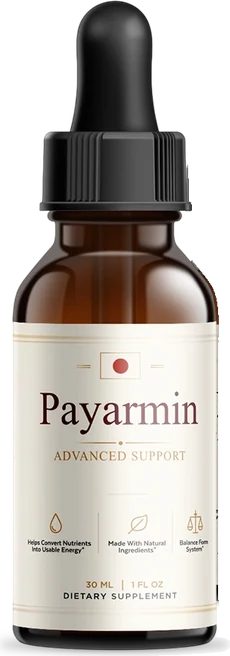
Payarmin: from $49 a bottle30 mL each · label dose: 1 or 2 droppers daily · packs of 2, 3 or 6 · 3 and 6 ship free in the US · backed by a 60-day guarantee
View packsSales page claim
What does the sales page say ginseng does to muscle cells?
The sales page says ginseng “improves glucose uptake by muscle cells, independent of insulin”. It gives no amount and no source (Payarmin sales page).
The human research we cite measured fasting glucose and A1C, not muscle uptake. NCCIH finds no reliable evidence that any herbal supplement controls diabetes (Diabetes and Dietary Supplements per NCCIH).
A health claim needs competent and reliable evidence, usually from human trials of the same product (Health Products Compliance Guidance per FTC).
| Source | What it says |
|---|---|
| Sales page | Quoted muscle-cell claim. Calls the ginseng a root. |
| Label | Aerial Extract, twelfth of 22, so at most about 17 mg per 1 ml. |
| Research | Root: about 5.6 mg/dL lower fasting glucose, no A1C change. |
The other five claims are on the benefits page.
Safety
Who should be careful with ginseng?
Anyone on blood thinners or diabetes medicine should ask a doctor first, because NCCIH says ginseng may interfere with blood clotting and might lower blood sugar (Asian Ginseng per NCCIH).
Insomnia is the most common side effect, and ginseng may be unsafe in pregnancy (Asian Ginseng per NCCIH).
Keep taking every prescribed medicine and dose. Do not stop or change one because of a supplement.
Ginseng is one of several lines that could matter for a glucose drug. Chromium and gymnema are the others.
The label asks pregnant or nursing mothers, anyone under 18 and anyone with a known medical condition to consult a physician first.
Label profile
Where does ginseng sit among the 23 label lines?
Ginseng is line 12 of the 22 blend names, between grapefruit extract and raspberry ketones.
The tables below set its label facts beside the research.
| Printed name | Panax Ginseng Aerial Extract |
|---|---|
| Kind of ingredient | Asian ginseng, above-ground parts (the sales page calls it a root) |
| Where it sits | 12 of 22 in the 200 mg proprietary blend |
| Content in 1 ml | No printed amount; ranked 12 of 22 in the 200 mg blend, which caps it near 17 mg per 1 ml |
| Dose in studies | Root trials: about 100 mg to 20 g a day; one berry trial about 1,000 mg of extract |
| How strong the evidence is | Root: a modest fasting-glucose drop, no A1C change; aerial parts: one small berry trial |
| Usual marketing or folk use | Studied for glucose control (mostly the root) |
| Chief caution | May lower blood sugar; may affect blood thinners; insomnia. |
FAQ
Questions people raise about panax ginseng (aerial)?
One to start with: Does ginseng lower blood sugar? Plus 5 more answered below.
Each answer gives the plain reply first, then the reasoning and a citation where available.
Does ginseng lower blood sugar?
A little, in some trials. Across 16 root trials fasting glucose fell about 5.6 mg/dL with no clear A1C change (PLoS One 2014 per Shishtar et al.). NCCIH calls the overall evidence inconclusive (Asian Ginseng per NCCIH). Payarmin has an aerial extract at no more than about 17 mg a serving.
Is the ginseng in Payarmin a root or a leaf?
Neither exactly. The label says Panax Ginseng Aerial Extract, meaning above-ground parts. The sales page calls it a root. The leaf and berry are aerial parts, but the label does not say which are used (Payarmin sales page)(stem, leaf and berry (UPLC-QTOF/MS) per Ginsenosides in root).
How much ginseng is in Payarmin?
The label does not say. Ginseng is twelfth in a 200 mg blend of 22, so a 1 ml serving holds at most about 17 mg, and about 9 mg on an even split (21 CFR 101.36 (eCFR)). Root trials ran from about 100 mg a day upward (PLoS One 2014 per Shishtar et al.).
Can ginseng interact with blood thinners?
It may. NCCIH says ginseng may interfere with blood clotting and interact with some medicines (Asian Ginseng per NCCIH). If you take a blood thinner, ask your doctor or pharmacist before using Payarmin, and keep taking your prescribed medicine.
Is Panax ginseng the same as American ginseng?
No. Panax ginseng is the Asian ginseng NCCIH describes (Asian Ginseng per NCCIH). American ginseng is a different plant, and our sources do not cover it, so do not assume the same results apply. Payarmin lists only Panax ginseng.
Is ginseng good for blood sugar?
The evidence is mixed. Root trials show a modest fasting-glucose drop and no A1C change (PLoS One 2014 per Shishtar et al.), and NCCIH calls the research conflicting (Asian Ginseng per NCCIH). It is not a replacement for diabetes care, and aerial parts have little data.
Who wrote this
Who wrote and reviewed this Payarmin guide?
The Payarmin label desk drafted these pages from the bottle label, the order page and public research links.
The clinician who reviews these pages is named in the box below when that review exists.
Every page starts at the printed bottle label, quotes the order page, and links outside research.
Page updated . How we work: editorial standards and how reviews are checked. This site belongs to an authorized Payarmin shop. It is separate from the maker and from the distributor named on the label. Orders placed through our links pay the shop a commission.
Keep reading
Where to go next
Good next stops are ingredients, side effects, maca and adaptogens.
All three use the same label facts and cite their research.
American Payarmin authorized shop
Ready to try Payarmin?
Ask your pharmacist about your own medicines, then choose a size. The larger packs lower the per-bottle price and include free US delivery; the refund clock runs from purchase day.
- Checkout on the sales page
- 60-day results-or-refund guarantee
- US delivery free on 3- and 6-packs